
Six Decades of the Avant-Garde: New York’s Historic Poetry Project Marks 60 Years with a Radical New Publication
In the volatile landscape of American arts institutions, few spaces can claim to have maintained their radical edge, subcultural grit, and fierce editorial independence for over half a century. Yet, that is precisely the milestone The Poetry Project is celebrating this week as it officially enters its 60th anniversary year. Since founding its headquarters in 1966 at the historic St. Mark’s Church in-the-Bowery in Manhattan’s East Village, the Project has served as the undisputed epicenter of experimental American poetry. It is the sacred ground where icons like Allen Ginsberg, Patti Smith, Adrienne Rich, and John Ashbery tested new work, debated aesthetics, and built a sanctuary for the unclassifiable. To kick off this landmark diamond jubilee, the organization isn’t just looking backward, it is reigniting its legacy of political and artistic agitation by launching a brand-new publication titled The Device.
Far from a dusty, nostalgic retrospective, the debut of The Device is a direct continuation of the Project’s storied history of activism. The print and digital publication is uniquely engineered to exhume and highlight the institution’s massive, rich archive. Specifically, it zeroes in on a fundamental but frequently overlooked pillar of the space: its decades-long role as a vital hub for anti-war organizing, internationalist solidarity, and grassroots community building. By blending rare archival documents, historic reading transcripts, and newly commissioned essays from contemporary writers, The Device aims to examine how poets have historically deployed language as a weapon of resistance against global state violence stretching from the height of the Vietnam War to the geopolitical fractures of the 21st century.
To celebrate 60 years of The Poetry Project is to understand how the institution fundamentally redefined the poet’s role in American society. Emerging during a time of intense civil rights struggles and anti-war mobilization in the late 1960s, the Project aggressively rejected the concept of the academic ivory tower. Instead, it was built on three core tenets that remain urgently relevant today:
A Sanctuary for Dissidence: The Project historically opened its doors to marginalized voices—including queer, Black, Indigenous, and person-of-color (BIPOC) writers—long before mainstream publishing or academia deemed their work viable.
Border-Defying Internationalism: From its earliest days, St. Mark's championed translation and cross-cultural exchange, actively booking poets from Latin America, Europe, and Asia to disrupt Western cultural hegemony.
Radical Accessibility: Located in the heart of a rapidly gentrifying Manhattan, the space has fiercely preserved its low-cost writing workshops and iconic Wednesday night reading series, ensuring emerging street poets can share the mic with living legends.
The rollout of The Device represents only the opening salvo of the Project's 60th-anniversary season. The organizers have teased an ambitious slate of programming running through next spring. Audiences can look forward to historic reading marathons, multidisciplinary performances blending experimental jazz with live poetry, and critical panels addressing the survival of independent literary spaces in a digital age. At a time when independent, community-run cultural spaces across New York City are fighting an uphill battle against rising rents and shifting funding landscapes, the sheer longevity of The Poetry Project is a triumph. It stands as living proof that poetry is not a passive art form, but a vital engine for gathering communities, documenting history in real-time, and daring to imagine alternative futures.
- Share this Article:


Great Poets
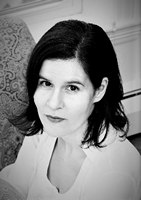 Joanna Klink is the author of five books of poetry. Her ...
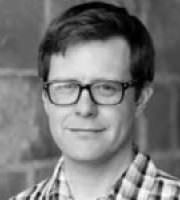 Aaron McCollough was born in 1971 in Columbus, Ohio and ...
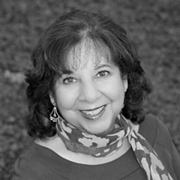 Gloria Amescua is an american latina and tijuana writer. ...
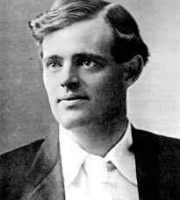 Jack London: John Griffith London (born John Griffith ...
 Arthur Chapman was an early twentieth-century American ...