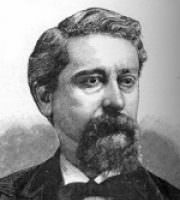
by Mona Van Duyn

I
It is to make a fill, not find a land.
Elsewhere, often, one sights americas of awareness,
suddenly there they are, natural and anarchic,
with plantings scattered but rich, powers to be harnessed—
but this is more like building a World’s Fair island.
Somebody thought it could be done, contracts are signed,
and now all materials are useful, everything; sludge
is scooped up and mixed with tin cans and fruit rinds,
even tomato pulp and lettuce leaves are solid
under pressure. Presently, the ground humps up and shows.
But this marvel of engineering is not all.
A hodgepodge of creatures (no bestiary would suppose
such an improbable society) are at this time
turned loose to run on it, first shyly, then more free,
and must keep, for selfs sake, wiles, anger, much of their
spiney or warted nature, yet learn courtesy.
II
It is closest to picaresque, but essentially artless.
If there were any experts, they are dead, it takes too long.
How could its structure be more than improvising,
when it never ends, but line after line plods on,
and none of the ho hum passages can be skipped?
It has a bulky knowledge, but what symbol comes anywhere near
suggesting it? No, the notion of art won’t fit it—
unless—when it’s embodied. For digression there
is meaningful, and takes such joy in the slopes and crannies
that every bony gesture is generous, full,
all lacy with veins and nenes. There, the spirit
smiles in its skin, and impassions and sweetens to style.
So this comes to resemble a poem found in his notebooks.
after the master died. A charred, balky man, yet one day
as he worked at one of those monuments, the sun guiled him,
and he turned to a fresh page and simply let play
his great gift on a small ground. Yellowed, unpublished,
he might have forgotten he wrote it. (All this is surmise.)
But it’s known by heart now; it rounded the steeliest shape
to shapeliness, it was so loving an exercise.
III
Or, think of it as a duel of amateurs.
These two have almost forgot how it started—in an alley,
impromptu, and with a real affront One thought,
“He is not me,” and one, “She is not me,”
and they were coming toward each other with sharp knives
when someone saw it was illegal, dragged them aw’ay,
bundled them into some curious canvas clothing,
and brought them to this gym that is almost dark, and empty.
Now, too close together for the length of the foils,
wet with fear, they dodge, stumble, strike,
and if either finally thinks he would rather be touched
than touch, he still must listen to the clang and tick
of his own compulsive parrying. Endless. Nothing
but a scream for help can make the authorities come.
If it ever turns into more of a dance than a duel,
it is only because, feeling more skillful, one
or the other steps back with some notion of grace
and looks at his partner. Then he is able to find
not a wire mask for his target, but a red heart
sewn on the breast like a simple valentine.
IV
If there’s a Barnum way to show it, then think back
to a climax in the main tent At the foot of the bleachers, a road
encloses the ringed acts; consider that as its design.
and consider whoever undertakes it as the whole parade
which, either as preview or summary, assures the public
hanging in hopeful suspense between balloons and peanut shells
that it’s all worthwhile. The ponies never imagined
anything but this slow trot of ribbons and jingle bells.
An enormous usefulness constrains the leathery bulls
as they stomp on, and hardly ever run amuck.
The acrobats practiced all their lives for this easy
contortion, and clowns are enacting a necessary joke
by harmless zigzags in and out of line.
But if the procession includes others less trustworthy?
When they first see the circle they think some ignorant
cartographer has blundered. The route is a lie,
drawn to be strict but full, drawn so each going forth
returns, returns to a more informed beginning.
And still a familiar movement might tempt them to try it,
but since what they know is not mentioned in the tromboning
of the march neither the day-long pace of caged
impulse, nor the hurtle of night’s terrible box-cars,
they shrink in their stripes and refuse; other performers
drive them out and around with whips and chairs.
They never tame, but may be taught to endure
the illusion of tameness. Year after year their paws
pad out the false curve, and their reluctant parading
extends the ritual’s claim to its applause.
V
Say, for once, that the start is a pure vision
like the blind man’s (though he couldn’t keep it, trees
soon bleached to familiar) when the bandage came off
and what a world could be first fell on his eyes.
Say it’s when campaigns are closest to home
that farsighted lawmakers oftenest lose their way.
And repeat what everyone knows and nobody wants
to remember, that always, always expediency
must freckle the fairest wishes. Say, when documents,
stiff with history, go right into the council chambers
and are rolled up to shake under noses, are constantly read from,
or pounded on, or passed around, the parchment limbers;
and, still later, if these old papers are still being shuffled,
commas will be missing, ashes will disfigure a word;
finally thumbprints will grease out whole phrases, the clear prose
won’t mean much; it can never be wholly restored.
Curators mourn the perfect idea, for it crippled
outside of its case. Announce that at least it can move
in the imperfect action, beyond the windy oratory,
of marriage, which is the politics of love.
- Share this Poem: