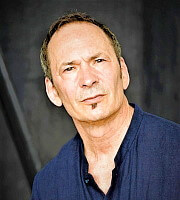
by Quentin Crisp
The real difference between the sexes is that men shop and
women go shopping. Women don’t love money with the
pure spiritual flame that men do. They want to convert it
into objects, jewelry, furs, clothing and accessories. Men
love money for its own sake. They finger checkbooks,
credit cards and bank boxes as though they were fetishes.
Men’s prayers are not based in words but in numerals.
Until recently, money had a bad name in England. A
British stage actress was once asked if the 1890s were really
as naughty as they are now perceived to have been. She
replied, “A peculiar morality prevailed at this time. We were
once called into the office of Mr. Edwardes^ and told that
the reputation of his theatre rested on our slender
shoulders. We were allowed to accept presents of flowers
and candy, jewelry and furs, yachts, houses and islands, but
never money.”
I remember, when I was young, my sister sweeping into
the room where my mother and 1 were sitting and stating
that, “The people next door have no money to speak of.”
Doubtless she was repeating something she had heard my
mother say. Nevertheless, my mother replied, “But money
is never to speak of.” This may have been out of selfdefense however, because we didn’t have any either.
When people visit my room here in New York, on
Third Street, they look around aghast and say, “Do you
have to live here?”
I used to say, “Yes.” But that’s not the whole answer.
If I knew that I would die in the next two years, I could
live anywhere, but I don’t. To my dismay, I seem
indestructible and so must conserve my wealth. This is why
I continue to live on Third Street in as humble
surroundings as I do.
Why do I not advise everyone to live as I do, to
renounce shopping, to buy nothing? For one thing, I don’t
think they would do it. But for another, all sorts of
unpleasant phrases would be flung at me, particularly by
shopkeepers and economists. They would accuse me of
fostering a sluggish economy.
I am no economist. I don’t know why money only
keeps its value by being spread around, but apparendy it
does. Another reason why I would never advocate others
stopping shopping is that I am frequently the recipient of
other people’s cast-offs and hand-me-downs. It would be
against my own interest to advise them not to go out and
shop at all.
I want to understand the retail trade. I feel vaguely that
I should spend my money, but it is very difficult. The
lifetime habit of thrift that I have is so hard to break. In
order to spend more freely I think I would have to work.
And I don’t like work. It ages you terribly. So, before I do
anything, before I even lift a finger, I have formed the habit
of asking myself, “Could I possibly get out of this?” And if
I possibly can, I do.
When I saw the excellent documentary film called Paris
is Barnin^ about the poor people of Harlem, 1 was surprised
to discover that when they were questioned by Ms.
Livingston‘S, who made the film, as to what they wanted in
life, it transpired they wanted luxury more than that they
wanted happiness.
One of her interviewees, a woman, said, “1 want a
swimming pool and a big car and a nice house.” To me all
those things would be a burden. I would have to look after
each of them. Even the damned pool I would have to have
cleaned every so often.
They say that the longing for luxury is the result of all
the television advertisements we are bombarded with
nowadays. 1 can’t say I have noticed. When the adverts
come on my television screen, I typically move about the
room busying myself or making my evening meal, which
consists chiefly of lumpy tea and green toast. I have never
seen anything advertised on television that I would want.
I have sometimes caught advertisements announcing
grand sales events, however, where everything is offered to
the public at 20% off. I can’t see how people know that is
the case. I’m sure they just inflate their prices for the rest of
the year so that they can bring them down occasionally to
generate stampedes of shoppers. I wouldn’t know though. I
have never attended a sale in my life. Sales mean crowds
and crowds of people must be avoided at all costs.
- Share this Poem: