
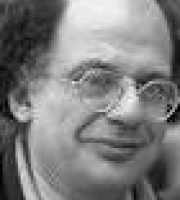
About Allen Ginsberg
(Newark, New Jersey, 1926 - New York 1997)Allen Ginsberg's Influence on Modern Literature
His poetry has been marked by classical modernity, but also by romanticism, jazz, Buddhism and his Jewish origin. His political commitment from left to anarchist, as well as the zen, yoga and drugs that change consciousness also influenced his creation. Ginsberg himself also called William Blake and Walt Whitman as essential influences. However, the most important of his mentors and promoters was the poet William Carlos Williams, who helped Ginsberg find his own poetic voice. Ginsberg was also a friend with musician and lyricist Bob Dylan. The two worked together on a series of exhibitions of a selection of Ginsberg poems and often exchanged lyrics and texts. In 1977, the two sang together a song from Leonard Cohen's album Death of a Ladies' Man. The progressive labor politician Tom Driberg also counts Ginsberg among his closest friends. He is also known to Paul McCartney, with whom he speaks about poetry and songs, and who draws the title of the musical album Electric Arguments from Ginsberg's poem Kansas City in St. Louis.
- Bruce Conner, an American avant-garde artist, created a portrait of Allen Ginsberg in 1960 as a mixed media object.
- Allen Ginsberg is a guest voice on the British punk band Fight Rock album The Clash.
- Rob Epstein and Jeffrey Friedman produced Howl - an experimental documentary film from 2010. It is based on the Howl poem and the circumstances of its publication.
- In 2013, Kill Your Darlings, another film about the life of Ginsberg and other representatives of the Beat generation was produced. Kill Your Darlings is an American biographical drama co-produced, co-written and directed by John Krokidas and released in 2013. The story is partly inspired by the novel And the Hippos Were Boiled in Their Pools, written by Jack Kerouac and William S. Burroughs, released in 2012.
Allen Ginsberg's influence on 1960s counterculture
Emblematic figure of the Beat generation, spokesperson of the protest of the 1960s, poet of space and street, Allen Ginsberg was a controversial American writer who expressed his hatred of materialistic America in a rhythmic and imaginary search in which the abhorrent banality of the native country is linked to the songs inspired by the East and the energy of the subject, delivered to his mystical inspiration and psychic movement. He has held various jobs and traveled throughout Europe, Africa, and America, disseminating the themes that characterize the Beat Generation. His relationship with America has always been ambiguous, something like a great, disappointed love that turns into cries of hatred and, in any case, aggression: “America I’ve given you all and now I’m nothing. America when will we end the human war ? Go fuck yourself with your atomic bomb.”What is Allen Ginsberg's most famous poem?
Allen Ginsberg's best-known work is the long poem "Howl" (1956) which founded his glory and which triggered a scandal in 1956, because at the time Ginsberg's language seemed obscene to many - which led to the temporary prohibition of the poem and the arrest of publisher and poet Lawrence Ferlinghetti. The ban led to an important protest campaign in the struggle for artistic freedom; in the end, a judge lifted the ban again. Ginsberg's second principal poetic work is Kaddish, which he wrote to commemorate his deceased mother.
- Publication: 1956 by City Lights Bookstore.
- Theme: Social non-conformity and mental health.
- Impact: Redefined freedom of expression in the USA.
Allen Ginsberg's most famous poem and the Obscenity Trial of Howl
The title of his first collection, Howl (1956), indicated clearly his will to break up and protest and his struggle against all established conventions. The book caused a real scandal and even led to a lawsuit. After creating a nightmarish atmosphere in which men wander like lost souls, Ginsberg questioned certain aspects of modern society and ultimately addressed a reclusive friend considered representative of the general condition of modern man. The important thing, for him, is “to write without fear,” to let his visions flow in “magic verses,” whose roar will continue to be heard for a long time.
Ginsberg's later poetry
Among his most significant works, we can mention Kaddish (1958-1960), Empty Mirror: Early Poems (1961), Reality Sandwiches (1963), and Planet News: 1961-1967, (1968) which accentuate this grip on a deceptive reality undermined by the power of perverted language (Indian Diaries, 1970; the Fall of America, 1973). The poetic breath of the poet-mage's image is evident in The Contests of Bards (1977) and Mind Breaths (1978), a literary game and dialogue between a Boy and a Hermit Sage that combines Blake's hallucinatory influences, Buddhist detachment and American tradition (from Whitman to Hart Crane and William Carlos Williams): Plutonian Ode: And Other Poems 1977-1980 (1982); Collected poems 1947-1980 (1984); Cosmopolitan Greetings: Poems 1986-1992 (1994).Browse all poems and texts published on Allen Ginsberg
Ginsberg's poetry was strongly influenced by Modernism, Romanticism, the beat and cadence of jazz, and his Kagyu Buddhist practice and Jewish background.