
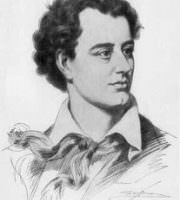
About John Keats
John Keats (October 31, 1795, in London — February 23, 1821, in Rome), was an English poet considered as one of the main figures of the second generation of romantic poets along with Lord Byron and Percy Bysshe Shelley, despite his work having been in publication for only four years before his death from tuberculosis at the age of twenty-five. His first poem, “O Solitude”, appeared in Leigh Hunt's Examiner in May 1816, and his collection “Lamia, Isabella, The Eve of St. Agnes and other poems” was published in July 1820.John Keats's poetry draws on numerous genres, from the sonnet and the Spenserian romance to the epic, inspired by John Milton, which he reshaped according to his own style. His most admired poems are the six odes dated 1819: “Ode on Indolence,” “Ode on Melancholy,” “Ode to Psyche,” “Ode on a Greek Urn,” “Ode to a Nightingale,” and “Ode to Autumn,” often considered the most accomplished poem ever written in English.
During his lifetime, Keats was in no way associated with the leading poets of the Romantic movement, and he himself felt uncomfortable in their company. Outside the circle of liberal intellectuals surrounding his friend, the writer Leigh Hunt, his work was criticized by conservative commentators as being insipid and in bad taste, “upstart poetry” according to John Gibson Lockhart, and, according to John Wilson Croker, “poorly written and vulgar.”
However, from the end of his century onward, Keats's fame steadily increased: he was then considered one of the greatest poets in the English language, and his verse, as well as his correspondence—primarily with his younger brother George and a few friends—are among the most discussed texts in English literature.
Browse all poems and texts published on John Keats
Poetry should surprise by a fine excess and not by singularity, it should strike the reader as a wording of his own highest thoughts, and appear almost a remembrance.