About Langston Hughes
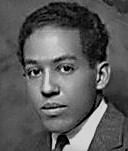
Langston Hughes (February 1, 1901 – May 22, 1967) was an African-American poet, novelist, short story writer, playwright, librettist, columnist, translator, and civil rights activist. He was a major figure in the African American cultural movement known as the Harlem Renaissance. Hughes is best known as a leader of this movement. He was also one of the earliest innovators of the then-new literary art form called Jazz Poetry. He famously wrote about the period where the “Negro” insinuation was in vogue, which was later paraphrased as when “Harlem” was in vogue. His poetry and fiction portrayed the lives of the working-class African-Americans in America, lives he portrayed as full of struggle, joy, laughter, and music. Permeating his work is pride in the African-American identity and its diverse culture.Making his writing debut as a journalist for the NAACP's official newspaper, The Crisis, Langston published his first collection of poems, The Weary Blues, in 1926, which included one of his most famous poems: The Negro Speaks Of Rivers.
A major player in the Harlem Renaissance cultural movement, which saw the emergence of a whole series of African-American artists, he wrote in 1926 in the American political weekly The Nation the text “The Negro Artist and the Racial Mountain”, which many consider to be the manifesto of black artistic commitment. In his works, Langston Hughes depicted the lives of Black working-class people, a life filled with joys, disillusionment, hope, and more, all infused with jazz and blues. He later stated, “I sought to understand and describe the lives of Black people in the United States and, in a more distant way, the lives of all human beings.” Through his work, he aimed to demonstrate the importance of a “Black consciousness” and a cultural nationalism that unites people rather than divides them. This pride was subsequently embraced by numerous literary figures such as Nicolás Guillén, Léopold Sédar Senghor, and Aimé Césaire.
After publishing numerous collections of poetry, plays, essays, and screenplays, he began writing two autobiographies at the encouragement of his friends: “The Big Sea”, and “I Wonder as I Wander”. In the 1950s and 1960s, Langston Hughes's popularity among African American authors declined even as it grew worldwide. He was criticized for not updating his discourse of “Black pride” to reflect the improving conditions of Black people in the United States during that period. Nevertheless, he remains a role model for many writers.
Browse all poems and texts published on Langston Hughes
For my best poems were all written when I felt the worst. When I was happy, I didn't write anything.