
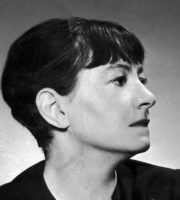
About Dorothy Parker
Dorothy Parker, née Rothschild on August 22, 1893, in Long Branch, New Jersey, and died on June 7, 1967, in New York City, sometimes called Dottie, was an American poet, short story writer, literary critic, lyricist, playwright, screenwriter, and dialogue writer, best known for her caustic humor, wit, and sharp observations of 20th-century urban and patriarchal society. She was one of the founders of the international magazine “The New Yorker”. For her intellectual agility, she was nicknamed “The Wit.”She sold her first poem to Vanity Fair magazine in 1914 and some months later was hired as an editorial assistant for another Condé Nast magazine, “Vogue”. She moved to Vanity Fair as a staff writer after two years at Vogue. Parker published her first volume of poetry, Enough Rope, in 1926 and became a bestseller, going through eleven printings. The collection sold 47,000 copies and garnered impressive reviews. In 1928, Boni & Liveright published her second poetry collection, “Sunset Gun”, which was also a success and garnered favorable reviews. In 1931, her third and final poetry collection, “Death and Taxes”, was published by Viking Press. Her literary reviews in The New Yorker were also one of the magazine's main attractions. A compilation of her reviews published between 1927 and 1933 was published in 1970 by Viking Press under the title “Constant Reader”. In 1929, her first short story, “Big Blonde,” was published. It recounts the bleak and cynical vision of Hazel Morse, a woman of the 1920s—a period often considered both fabulous and liberating for women—a woman terrified by loneliness and despair. “Big Blonde” was warmly received by critics and readers alike, winning the O. Henry Award for Best Short Story of 1929. In 1930, Viking Press published her collection of short stories, “Laments for the Living”, which garnered positive reviews, including one from The New York Times.
The Nation described her verse as caked with a salty humor, rough with splinters of disillusion, and tarred with a bright black authenticity. Although some critics, notably the New York Times reviewer, dismissed her work as flapper verse. Dismissive of her own talents, she deplored her reputation as a wisecracker. Nevertheless, her literary output and reputation for her sharp wit have endured. Here are some of her most notorious and famous poems.
Browse all poems and texts published on Dorothy Parker
If you're going to write, don't pretend to write down. It's going to be the best you can do, and it's the fact that it's the best you can do that kills you.