About Siegfried Sassoon
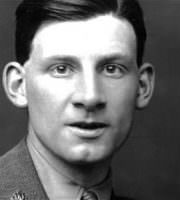
Siegfried Sassoon (1886 – 1967) was a British poet, writer who influenced authors such as Wilfred Owen and Robert Graves. He studied at Clare College, University of Cambridge. A soldier in the British Army, he was awarded the Order of the British Empire and the Military Cross. His literary work, “Memoirs of a Fox-hunting Man”, earned him the James Tait Black Memorial Prize in 1928.Initially known for his pacifist writings during the First World War, he later achieved fame with his memoirs and works of fiction. Decorated for bravery on the Western Front, he became one of the leading poets of the First World War. His poetry both described the horrors of the trenches, and satirized the patriotic pretensions of those who, in Sassoon's view, were responsible for a jingoism-fuelled war. Alongside his military service, he wrote poems, which were published under a pseudonym and only in small, privately printed editions. Sassoon had met Sir Edward Marsh in London before the outbreak of war in 1914 and had been encouraged by him. Marsh who was the sponsor of the Georgian school of poets and a friend to many poets, including Rupert Brooke, saw him as a budding poetic talent and encouraged him to continue writing. In the collection “Georgian Poetry 1916–17” (1917), Marsh published Sassoon's poems alongside those of Graves, helping both achieve public recognition as great young poets.
Sassoon processed his wartime experiences in the First World War in his early works such as “The Old Huntsman” (1917), “Counter-Attack” (1918), and “Satirical Poems” (1926). His semi-fictional autobiography, “The Complete Memoirs of George Sherston” (1937), was divided into three parts: “Memoirs of a Fox-Hunting Man” (1928), which won the Hawthornden Prize in 1929; “Memoirs of an Infantry Officer” (1930); and “Sherston's Progress” (1936).
Further autobiographical works followed, including “The Old Century” (1938), “The Weald of Youth” (1942), and “Siegfried's Journey 1916–20” (1945). In addition, he wrote a biography of the British novelist George Meredith in 1948. His later poems, such as Vigils (1935) and Sequences (1956), are predominantly spiritual.
Separated from his wife in 1945, Sassoon lived in isolation in Heytesbury, Wiltshire. In 1957, he converted to Roman Catholicism. He died seven days before his 81st birthday and is buried in St Andrew's Church in Mells, Somerset.
The discovery in 2013 of an early draft of one of Sassoon's best-known anti-war poems had biographers saying they would rewrite portions of their work about the poet.
Browse all poems and texts published on Siegfried Sassoon
And my last words shall be these – that it is only from the inmost silences of the heart that we know the world for what it is, and ourselves for what the world has made us.