
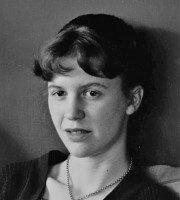
About Sylvia Plath
Sylvia Plath is celebrated as a prominent American poet, novelist, and short story writer. She attended Smith College and Newnham College, Cambridge, before achieving acclaim as a professional poet and author. In 1956, she married fellow poet Ted Hughes. While she is best known internationally for her poetry, she also gained renown for The Bell Jar, an autobiographical novel that details the circumstances of her first bout of depression in early adulthood. Her life, work, and poetic and literary aesthetic are the subject of thousands of studies worldwide. She published her first collection of poems, The Colossus, in England in 1960. Among her most famous poems, “Daddy” explores the complex father-daughter relationship. This poem is often considered one of her most powerful texts. “Lady Lazarus” is also another popular poem that deals with resilience and rebirth, with references to mythology and her own life experiences. Indeed, in February 1961 she had a miscarriage, an event that would later haunt most of her poems. Contrary to what was previously known, the belated publication in 2017 of Sylvia Plath's correspondence with her therapist revealed the domestic violence inflicted by Ted Hughes: he allegedly beat her, causing her miscarriage two days later in 1961. Ted and Sylvia separated less than two years after the birth of their first child. This separation was long attributed and explained by Sylvia's mental health issues and Ted's affair with the wife of a poet friend. But these letters have shed new light on the matter. Other famous of her poems include “Ariel”, the title of the poem is also that of one of her most famous collections; “The Colossus” another poem that, like “Daddy”, deals with her relationship with her father; and “Tulips”, a poem where Plath describes her periodic stays in the hospital and her desire to leave the world, while simultaneously being confronted with the vibrancy of the tulips in her room.Since her suicide in 1963, Sylvia Plath has become an emblematic figure in English-speaking countries. Feminists see in her work the archetype of “female genius crushed by a male-dominated society,” while others see her as an icon whose poetry, largely published posthumously, fascinates as the poignant chronicle of a suicide foretold. Her last known poem, titled Edge, serves as a premonitory testament.
Browse all poems and texts published on Sylvia Plath
You ask me why I spend my life writing? Do I find entertainment? Is it worthwhile? Above all, does it pay? If not, then, is there a reason?... I write only because there is a voice within me. That will not be still.