About T. S. Eliot
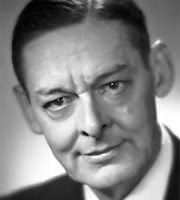
T. S. Eliot, full name Thomas Stearns Eliot (1888-1965), was a British poet and writer of American origin. A student at Harvard, he acquired a solid humanist culture. After having been a professor of philosophy at Harvard between 1912 and 1914 and having made a study trip in 1913 through Germany, he returned to England. At Merton College, Oxford, he was working on writing a thesis on the philosopher Bradley. He gave up defending it and did not publish it until 1964 under the title of “Knowledge and experience in the philosophy of F.H. Bradley”. He was first close to American poetic modernity and to the group formed around Ezra Pound, who published in the magazine Poetry, where he was editor, Eliot's poem “The Love Song of J. Alfred Prufrock” in 1917, and to whom “The Vain Land” (1922) was dedicated.In 1915, he married Vivien Haigh-Wood and began his professional activities. Initially a teacher, he worked, from 1917, in the banking. But his marriage is not happy: his wife suffers from a nervous illness. This situation produced constant psychic alterations in the writer who, in 1921, went to rest in Lausanne. That is where he composed one of his masterpieces, “The Waste Land”.
In 1927, he acquired British citizenship and embraced the Anglican religion. After this conversion and his British naturalization, he turned to writing centered on spirituality, represented in particular by “Four Quartets” (1939-1942), a collection which earned him the Nobel Prize for Literature in 1948. He also wrote seven plays and a large number of essays on poetry and on authors such as William Shakespeare and Dante Alighieri. He approached the theater in 1935 with “Murder in the Cathedral”. After breaking up with his first wife in 1932, he remarried in 1957; This second happy marriage brought him calm and inner peace during the last eight years of his life.
As a poet, Eliot followed a career characterized by a constant interrogation of human destiny and the absolute, punctuated by theoretical reflection. From the beginning of his work, he considers that the function of poetry is to account for the entire contemporary dimension. To do this, it is advisable to take a certain distance, to subtly associate subject and object, world and poet. It's what's stupid in “Mélange Adultère de Tout” or in “The Love Song of J. Alfred Prufrock”. The balance that must be found requires an art of conciliation from the creator. The historical phenomenon must not hide the self; but the self, in turn, should not get the better of it. In reality, it is advisable to unite sign and meaning as closely as possible, so that thought becomes sensitive. The game of images, parallelisms, and correspondences will help with this. “The Waste Land” (1922) offers an example of this complex plot, dealing successively with the themes of metamorphosis, the ambiguity of the sign and the search, developed from the myth of the Grail and pagan mythology. On the other hand, in this poem the three voices of poetry that Eliot will distinguish in a 1953 conference already resonate: “the voice of the poet who speaks”; “the voice of the poet who addresses an audience” and “the voice of the poet who strives to create a dramatic character.” Eliot's evolution leads to the Four Quartets that, pursuing conciliation, establish a bridge between the timeless and the fugitive of the present. Eliot's dramatic work is an extension of his poetic work. In Murder in the Cathedral (1935), Family Reunion (1939), The Cocktail Party (1950), The Confidential Clerk (1953) and The Elder Statesman (1959), Eliot strives to build a theater that overcomes social differences.
T. S. Eliot died of emphysema at his home in Kensington, London, on January 4, 1965.
Browse all poems and texts published on T. S. Eliot
Poetry is not a turning loose of emotion, but an escape from emotion; it is not the expression of personality but an escape from personality