
About Anna Akhmatova
Anna Akhmatova, pseudonym of Andreievna Gorenko (1889-1966) was a Russian modernist poet, one of the most acclaimed writers in the Russian literature. She is the most celebrated of Russian poetesses. Nicknamed the “Queen of the Neva” or “Soul of the Silver Age”, her work includes both short lyric poems, a genre she helped to renew, and large poetic compositions, such as Requiem, her dark masterpiece on Stalinist terror. Her style, characterized by its economy and emotional restraint, was strikingly original and distinctive to her contemporaries. The strong and clear leading female voice struck a new chord in Russian poetry. Her perennial themes include meditations on time and memory, and the difficulties of living and writing in the shadow of Stalinism.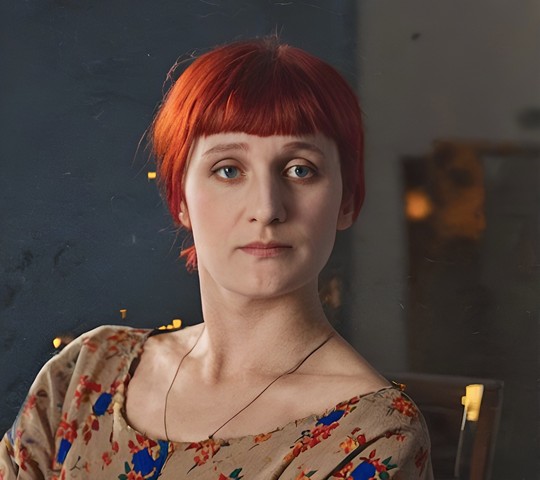
After resuming her studies in literature in St. Petersburg, she published her first collection, Evening, in 1912, to great acclaim. By the time her next collection, The Rosary, appeared in 1914, thousands of women had begun composing poems in Anna Akhmatova's style. Her early works usually depict a man and a woman engaged in the most intense and ambiguous moments of their relationship. Such pieces were much imitated and later parodied by Vladimir Nabokov and others. This success prompted Akhmatova to exclaim, “I have taught our women how to speak, but I do not know how to make them shut up.”
Born near Odessa to a family of sailors, she dreamed of becoming a dancer one day, but very soon began to stand out in St. Petersburg's literary circles with Pushkin poems, which were short dramas of everyday life of absolute clarity. This fact seduced the Russian Symbolists, especially Alexander Blok, with whom she was apparently in love. From its inception, she belonged to the Acmeist literary movement, whose leader, Nicholai Gumilev, whom she married in 1910, was shot by the Bolsheviks.
The following collection, The White Flock, was published in 1917, but its distribution suffered from the events of the time. In 1918, she divorced Gumilev and remarried the Assyriologist Vladimir Chileiko (1891-1930), from whom she separated in 1921, and then lived until 1938 with the historian and art critic Nikolai Punin. She subsequently refused Boris Pasternak's proposals for marriage.
In addition to collections of nostalgic verse, Evening (1912), The Rosary (1911-1912), and Anno Domini MCMXXI (1922), Akhmatova produced, between the two wars, perfect translations of French, Romanian, and even Chinese poets. Excluded from the Writers' Union at Dejdanov's request for the intimate, “non-proletarian,” and sometimes religious tone of her poems, “the Egyptian”—the nickname Modigliani gave her when he painted her portrait—found herself directly threatened: in 1950, a mediocre collection far removed from her style, In Praise of the Page, was published under her name, praising above all Stalin's policies. A mythical creature of severe appearance, wrapped in a large black shawl with red roses, the “Assyrian Princess” of the Acmeists remained serene in the face of death: “My unfinished page will be written in a single gesture / by a hand gilded in the sun, / by the hand of my muse, divinely light and tranquil.”
The new authorities deemed her works “too socially irrelevant,” and Akhmatova was condemned as a bourgeois element, and her poetry was banned from publication in 1922 for more than thirty years. Akhmatova earned a living by translating Victor Hugo, Rabindranath Tagore, and Giacomo Leopardi, and by publishing essays, including some brilliant ones on Pushkin, in specialized journals. Nevertheless, her works never ceased to circulate under the counter.
The Great Patriotic War brought her works back into print: in 1940, she became a member of the Union of Soviet Writers, and her poems appeared monthly in the magazine Zvezda (The Star). She wrote about the siege of Leningrad. Her poem Courage was published in 1942 on the front page of Pravda. But, as soon as the conflict ended, a victim of artistic Zhdanovism, she was expelled from the Writers' Union in 1946 for “eroticism, mysticism, and political indifference” and was no longer able to publish officially. Andrei Zhdanov wrote of her that she was “a nun or a whore, or rather, both a nun and a whore who combines indecency with prayer.”
After Stalin's death in March 1953, Akhmatova was slowly rehabilitated and gradually reappeared on the Soviet literary scene. She then continued to compose her most important works, Poems Without Heroes and Requiem, works in tribute to the victims of Stalin's terror. A censored edition of her work was published, omitting Requiem. On the eve of the third anniversary of Stalin's death, on March 4, 1956, Akhmatova told her friend and confidante Lydia Chukovskaya: “Stalin is the greatest executioner history has ever known. Genghis Khan and Hitler are choirboys compared to him.”
When the poet Robert Frost visited her at her dacha in 1962, she wrote: “I've had it all: poverty, prison routes, fear, poems only memorized, and poems burned.” And the humiliation, and the pain. And you don't know anything about it and wouldn't be able to understand it if I told you...” In 1964, she was allowed to leave the USSR to receive a poetry prize from Taormina, and she was made an honorary doctor of Oxford University. She received two nominations for the Nobel Prize in Literature in 1965 and three in 1966.
Browse all poems and texts published on Anna Akhmatova
I am in the middle of it: chaos and poetry; poetry and love and again, complete chaos. Pain, disorder, occasional clarity; and at the bottom of it all: only love; poetry. Sheer enchantment, fear, humiliation. It all comes with love