
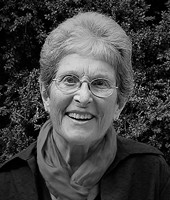
About Maxine Kumin
Maxine Kumin (on June 6, 1925, in Philadelphia and died on February 6, 2014, in Warner, New Hampshire) was born Maxine Winokur of Jewish parents in Philadelphia. In 1957, she studied poetry with poet John Holmes at an adult education center in Boston. There, she met Anne Sexton, with whom she formed a lifelong friendship until her suicide in 1974. She was also educated at Radcliffe. She has written poetry, criticism, fiction, and more than twenty children’s books, including four coauthored with Anne Sexton. She has taught at Tufts, the University of Massachusetts, and Princeton. However, Kumin spends much of her time in rural New Hampshire, where she raises horses. Although she has often written about middle-class suburban experience, seeking survival and continuity in the vestiges of nature it encompasses, she has also made harsh and witty appraisals of rural life. Her sharp irony, her New England settings, and her use of traditional forms make comparison with Frost both inevitable and reasonable. The easy linking of her with transcendentalism is less warranted, in part because Kumin rarely seeks lyrical transcendence of any kind, preferring stoical observation instead. She has also written sympathetically about women’s lives and taken on public topics like famine, pollution, and nuclear war. See her Selected Poems 1960—1990 (1997). Maxine Kumin has received numerous literary awards and honors, including the 1972 Eunice Tietjens Memorial Prize for Poetry, the 1973 Pulitzer Prize for Poetry for Up Country, the Aiken Taylor Prize, the Poets' Prize, the Ruth E. Lilly Award, and more. In 1981-82, she served as a poetry expert for the Library of Congress.Critics have compared Maxine Kumin to American poet Elizabeth Bishop, because of her meticulous descriptions, and to poet Robert Frost, because of her strong interest in the rhythm of life in rural New England. She is also often associated with Confessionalist poets such as Anne Sexton, Sylvia Plath, and Robert Lowell. Throughout her work, Maxine Kumin develops a fine balance between her innate sense of the transience of life and her fascination with the density of the nature that surrounds her.
Browse all poems and texts published on Maxine Kumin
It is important to act as if bearing witness matters, "The garden has to be attended every day, just as the horses have to be tended to," and Writing is my salvation. If I didn't write, what would I do?