
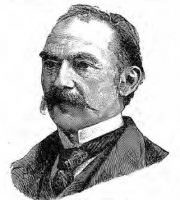
About Thomas Hardy
Thomas Hardy was an English poet and writer, one of the most important of his time. Born near Dorchester, he studied architecture and practiced that profession for a few years, before devoting himself methodically and exclusively to literature. In the meantime, he had lost his faith and had opened himself to the influence of Schopenhauer and Darwin, which explains the general pessimism of his work.Some of Hardy's most famous poems are from 'Poems of 1912–13', which are a sequence of elegies that Thomas Hardy wrote after the sudden death of his first wife, Emma, on the morning of 27 November 1912. They describe her death, Hardy’s reaction, and his visit to the scenes of their courtship in Cornwall the following March. They had been estranged for twenty years, and these lyric poems express deeply felt regret and remorse. Poems like 'After a Journey,' 'The Voice,' and others from this collection are, by general consent, regarded as the peak of his poetic achievement. Many of Hardy's poems deal with themes of disappointment in love and life.
However, all his novels were published between 1871 and 1895, like Desperate Remedies and Jude the Obscure. They are set in the imaginary county of Wessex (the name of the ancient kingdom of the West Saxons), where various towns in Dorset and the surrounding region are easily recognizable: it is to provincial life that Clym Yeobright returns, and to which Eustacia Vye feels imprisoned in The Return to the Native Country (1878). On the horizon, the city appears, a dehumanized place where Hardy's protagonists, his poor victims, are soon devoured (for example, Aldbrickham or Christminster in Jude the Obscure). Hardy's novels have been criticized for numerous flaws: the comic scenes in which he makes the peasants speak in dialect are too long and boring (moreover, the comic genre, which he once addressed with The Hand of Ethelberta (1876), did not suit his characteristics). The style is uneven and artificial; traits of pedantry and clumsiness alternate with paragraphs of admirable clarity; perhaps the author's rejection of marriage reflects his personal disappointment, but that was no reason to proclaim it so insistently. Hardy had to fight the demands of his publishers and the magazine and mobile book readers of his time: he was even forced to accept expurgated versions of his masterpieces, Tess of the d'Urbervilles (1891) and Jude the Obscure. The complete version he offered provoked such a scandal that Hardy decided to abandon the narrative genre. While it is true that he was the victim of critical attack, it should not be forgotten that his novels often contain elements that constitute a true assault on the reader's beliefs or sensibilities: in The Mayor of Casterbridge (1886), Michael Henchard, drunk, sells his own wife to another man; in Jude the Obscure, a boy hangs himself after having hanged his brother and sister, etc. Hardy tried to defend himself from the attacks by arguing that his books had a moral scope, that he was a 'moralist,' a believer in progress, and not an absolutely hopeless pessimist. He brought into his novels a Destiny very close to the classical Fatum (at times even revealing a clear influence of Aeschylus) that unleashes inexorable catastrophes. It also sometimes manifests itself in the form of The Little Ironies of Life (the title of one of his collections of short stories published in 1894). And his protagonists are generally able to cope with tragedy, even if they end up succumbing: Henchard and Jude are touching figures in their efforts to lead a more dignified life, an effort defeated by their lack of lucidity and the hostility of the world. His female portraits are more disconcerting: one need only recall Teresa or Sue Bridehead, Jude's companion. From 1895 onwards, Hardy returned to poetry, which he had already practiced in his early days. The Wessex Poems appeared in 1898: the same setting, the same themes. Begun ten years earlier, the sprawling epic drama The Dynasts, a powerful vision of the Napoleonic Wars, was published between 1903 and 1908. Perhaps some of its readers prefer the elegies of Veleris vestigia flammae, which Hardy wrote in 1912, after the death of his first wife. His poetry is intentionally narrative and, like his prose, suffers from his self-taught training. But the evocation of nature, like that of sadness, is truly original.
Browse all poems and texts published on Thomas Hardy
To find beauty in ugliness is the province of the poet.