About Robert Penn Warren
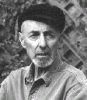
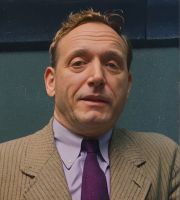
Robert Penn Warren (April 24, 1905, in Guthrie, Kentucky, and September 15, 1989, in Stratton, Vermont) was an American poet and writer. He was one of the founders of New Criticism and was also a founding member of the Fellowship of Southern Writers. In 1935, with Cleanth Brooks, he founded the literary journal The Southern Review. In 1947, he received the Pulitzer Prize for the Novel for his most famous novel, All the King's Men (1946), and the Pulitzer Prize for Poetry in 1957 for Promises: Poems 1954-1956 and in 1979 for Now and Then. Promises. He is the only man of letters to have been awarded in both categories. In 1957, he was awarded the American Rome Prize for Literature. In 1980, he was awarded the Presidential Medal of Freedom by President Jimmy Carter. In 1981, he received the MacArthur Award. On February 26, 1986, he was selected as the first Poet Laureate of the United States. In 1987, he was awarded the National Medal of Arts.While attending Vanderbilt University, Warren became involved with a small group of poets known as the Fugitives (they had founded a literary magazine called The Fugitive, which featured some of their work). Later, in the 1930s, he joined some of the magazine's former contributors to form a group of writers advocating for agrarian policies in the South: the Southern Agrarians. He contributed the text The Briar Patch to the agrarian manifesto I'll Take My Stand, along with eleven other Southern poets and writers (including his former Vanderbilt classmates John Crowe Ransom, Allen Tate, and Donald Davidson). In 1965, he published Who Speaks for the Negro?, a book containing interviews with major figures of the Civil Rights Movement such as Malcolm X and Martin Luther King, and thus moved further away politically from the traditionalist line of thought of his agrarian comrades such as Tate, Cleanth Brooks, and especially Davidson. These interviews with the main figures of the Civil Rights Movement can still be consulted at the University of Kentucky, in the Louie B. Nunn Center for Oral History.
Browse all poems and texts published on Robert Penn Warren
The poem is a little myth of man's capacity of making life meaningful. And in the end, the poem is not a thing we see-it is, rather, a light by which we may see-and what we see is life.