About Richard Savage
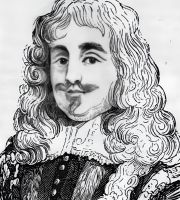
Richard Savage (1697–1743) was an English poet. He is best known as the anti-hero of a famous biography written by Samuel Johnson in 1744. Savage's first certain work was a poem satirizing Bishop Hoadly, entitled The Convocation, or The Battle of Pamphlets (1717), which he afterwards tried to suppress. He adapted from a Spanish comedy, Love in a Veil, (1719), which gained him the friendship of Sir Richard Steele, who became his first patron, and of Robert Wilks. With Steele, however, he soon quarrelled. In 1723, he played without success in the title role of his tragedy, Sir Thomas Overbury (1723), which nonetheless provided him a considerable amount of notoriety. In 1724 Savage was taken up by writer Aaron Hill, thus becoming part of a circle known as the "Hillarian Group”, which included several young poets such as John Dyer and James Thomson. Hill promoted their work in the bi-weekly magazine The Plain Dealer. Savage's Miscellaneous Poems were published by subscription in 1726.Savage lived in Swansea, then in England at Bristol, where he completed a new version of Sir Thomas Overbury (which was first published in 1777). Harassed by creditors and abandoned by friends, Savage reverted to a nocturnal existence. He then wandered the taverns and streets with his friend Samuel Johnson. He eventually ended up in Bristol, where he fell into debt again. Having finally broken with Pope, his last remaining supporter, he was sent to prison, where he died in 1743.
Browse all poems and texts published on Richard Savage
Knowledge of books and men exalts their thought, In wit accomplish'd, tho' in wiles untaught.