
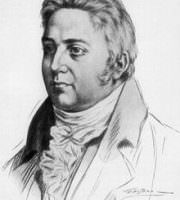
About Samuel Taylor Coleridge
Samuel Taylor Coleridge (1772-1834) was a great romantic English poet, writer, and a member of the Lake Poets. Born in Ottery Saint Mary (Devonshire), where his father was an Anglican clergyman, He is best-known as the author of the poems The Rime of the Ancient Mariner, Kubla Khan, Christabel, Frost at Midnight, and The Nightingale. His poems directly and deeply influenced all the major poets of his generation.Orphaned at the age of eight, he entered Christ's Hospital School in London at the age of ten, where he befriended Charles Lamb. In 1791, he obtained a scholarship to continue his studies at Cambridge. However, after a romantic disappointment, he enlisted in a regiment of dragoons. He soon returned to university, only to abandon it permanently without taking his final exams. During 1794, he met the poet Robert Southey and felt his own poetic calling awaken within him. The two young men became friends and, in September 1794, decided to collaborate on a historical drama entitled The Fall of Robespierre, which remained unfinished. In 1796, Southey left for Portugal with his uncle. Coleridge decided to remain in Great Britain, in Bristol. There he published his first collection of poems, “Poems on Various Subjects”. He also began writing “Addresses to the People”, speeches that caused quite a stir; then he edited “The Watchman”, a weekly publication that ceased after its tenth issue. Abandoning politics for poetry, he published his tragedy “Osorio” (1797), and later renamed “Remorse” (1813) after its rejection by Drury Lane Theatre.
After a brief stay in Bristol, he resided in Nether Stowey (Somerset), drawn by the presence of the poet William Wordsworth, whom he met in 1795. He then married Sara Fricker. In 1798, his collaboration with Wordsworth resulted in the publication of Lyrical Ballads, which marked the beginning of English Romanticism. In 1880, he left his wife and moved to Keswick, where he fell in love with Sara Hutchinson, his great passion for ten years. He then turned to opium, and his health deteriorated. After a short stay in Malta, he returned to England. Between 1812 and 1814, he gave a series of lectures on literary topics, and in 1816, he decided to live with Dr. Gillman, who cared for him until his death. From that year onwards, he dedicated himself to writing prose works: Literary Biography (1817), Aids for Reflection (1825), The Constitution of the Church and of the State (1830), Table Talks and Anima Poetae (both published posthumously). Having abandoned poetry, he limited himself to publishing some previously unpublished poems: Christabel (1816) and Kubla Khan (1816).
Coleridge is a curious example of literary fame. His reputation as a great poet rests simply on a body of work of about fifty pages, all written between 1797 and 1803. This meager output can be divided into two parts: on the one hand, there are the poems that evoke the everyday setting in which his own life unfolds: The Aeolian Harp (1795), Reflections After Leaving a Place of Retreat (1795), Midnight Frost (1798), and Despondency (1802) are compositions that he himself called “conversations in verse,” in which the poet's self is simultaneously exalted and an intimate setting is constructed. But above all, it is his fantastic inspiration that draws attention, visible in three essential poems: The Rime of the Ancient Mariner (1798), Christabel, and Kubla Khan. The first describes an unusual nature, characterized by the unreal; It is dominated by a dreamlike atmosphere, with a spirituality that bursts forth, particularly, in the affirmation of the need for respect for life and in the exaltation of love, the only thing capable of bringing man closer to God. The old sailor has not respected this rule and is therefore condemned to wander indefinitely. Christabel, an unfinished poem, raises the problem of evil once again. Imbued with Gothic terror, this text shows the power of evil which, triumphant, is capable of corrupting the purest innocence. For example, Kubla Khan, written in 1797 or 1798, constitutes a reflection on poetic creation. The despotic Khan represents all that is insensitive to universal harmony; the Lady of the Tympanum symbolizes creative imagination; the coexistence of the sunlit palace and ice caves evokes the function of poetry, which is none other than to reconcile opposing elements, to find the unity of the world beneath the multiplicity of appearances.
Browse all poems and texts published on Samuel Taylor Coleridge
Poetry: the best words in the best order.