About Sir Walter Scott
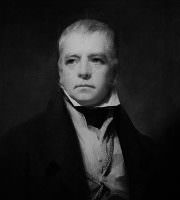
Sir Walter Scott was a Scottish poet, writer and historian born August 15, 1771 in Edinburgh and died September 21, 1832 in Abbotsford. He had a difficult childhood, divided between periods of study and periods of rest due to a serious illness. He trained for a legal career and, in 1792, became a lawyer. But he soon turned to literature. As a lawyer and fond of antiquities, he first traveled through Scotland in search of his past. He is best known for his poems “The Lady of the Lake” and “Marmion”. In 1804, he published Sir Tristrem, a version (which he considered purer than the continental versions) of the novel of Tristan, the manuscript of which he had discovered, and which he believed to be by Sir Thomas de Ercildoun, known as Thomas the Rhymer.In 1805, The Lay of the Last Minstrel was a great success (15,000 copies in 5 years) and brought him fame. At the turn of the 18th and 19th centuries, he launched himself into literature, publishing old texts “Sir Tristrem” or texts belonging to the popular tradition in “The Minstrel Songs of the Scottish Border”, a collection of ballads first published in 1802, as well as some of his own famous poems such as “The Lady of the Lake”. However, facing the rising glory of Lord Byron, he turned to the Scottish novel “Waverley”, before moving towards the historical novel, Ivanhoe (1819) and Quentin Durward (1823).
His work can be divided into four major periods. He began by working as a translator. He then turned to poetry, which he cultivated especially between 1800 and 1813: in The Lay of the Last Minstrel (1805), Marmion (1808), and The Lady in the Lake (1810), he vividly evoked his native Scotland. Between 1813 and 1826, without completely abandoning his poetic inspiration, he was drawn to the novel. At first, he continued to seek his themes in the habits and customs of his country: Waverley (1814), Guy Mannering (1815), The Antiquary (1816), The Heart of Mid-Lothian (1818), etc. But he soon broadened his field of inspiration to encompass other countries and give his narrative works a historical dimension: Ivanhoe (1819) is set in England; Quentin Durward (1823) in France; and The Talisman (1825) opens itself even further to the world. The year 1826 marks the beginning of the last stage of his career: Scott, experiencing serious financial difficulties, was forced, in order to survive, to work as a copyist. Of this abundant output, two historical works stand out: The Life of Bonaparte (1827), a nine-volume biography published shortly after Napoleon's death, and the History of Scotland, the first volume of which appeared in 1829. But, within his varied body of work, only the novels remain fully relevant thanks to their original conception: recounting the past with the accents of the present.
He is one of the most famous Scottish authors with David Hume, Adam Smith, Robert Burns and Robert Louis Stevenson. He is also, along with Wordsworth, Coleridge, Byron, Shelley and Keats, one of the most illustrious figures of British romanticism. Walter Scott is also one of the representatives of the historical novel, he contributed to forging a romantic image of Scotland and its history. It's to him, in particular, that we owe the return of the use of the tartan and the kilt, the wearing of which had been prohibited by an act of Parliament in 1746.
Browse all poems and texts published on Sir Walter Scott
Teach your children poetry; it opens the mind, lends grace to wisdom and makes the heroic virtues hereditary.