About Stephen Spender
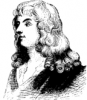
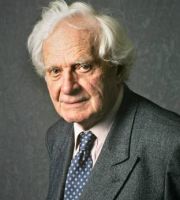
Stephen Spender, born on February 28, 1909, in Kensington and died on July 16, 1995, in Westminster, was a British poet, novelist, and essayist strongly committed to the fight for social justice and known for his ideas on class struggle. He was nine years old when the First World War ended and thirty when the Second World War began. Born February 28, 1909, near London, he spent his youth in the nervous uncertainties of a false peace, in the long tension between two wars. But Spender, unlike many of his fellows, did not fear his times. He refused to retreat, to isolate himself in a hermetically sealed art. He was particularly insistent that poetry should reaffirm its power and responsibility, accept the world of the airplane and the radio, speak to living men about the living age. “Drink from here energy,” Spender insisted, pointing to a world of violent action, “as from the electric charge of a battery.” And with energy Spender called for compassion. How could we ever doubt the common heart of humanity he asked, how could it be “ . . . That works, money, interest, building could ever hide The palpable and obvious love of man!”.His early works, notably Poems (1933), bear the mark of his political convictions, which were expressed even more clearly in Vienna (1934), a long poem in praise of Viennese socialists, and in Trial of a Judge (1938), an anti-fascist play in verse. The novel he began in 1929 was not published until nearly 60 years later, in 1988, under the title The Temple.
Less obscure, more certain of his symbols than Auden, Spender writes with a passion emphasized by quietness. His technique is assured without being exciting, but his tone is moving. His vein of “lyrical speculation,” wrote the critic David Daiches, “produces poetry which can hold its own with anything produced in the century.” An elementary school classroom in a slum is not an attempt to escape hard actuality and “find satisfaction in the 'possible worlds' of mythology.”
Rather it is a contrast between the possible worlds of poetry, as exemplified by Shakespeare, and beauty, symbolized by pictures of travel, and the grim world of politics and economics which surrounds us.
Browse all poems and texts published on Stephen Spender
Great poetry is always written by somebody straining to go beyond what he can do.