
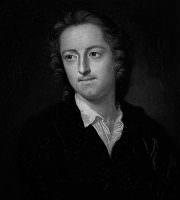
About Thomas Gray
Thomas Gray (London, December 26, 1716 – Cambridge, July 30, 1771), was an English poet of pre-romanticism, classical scholar and professor of history at the University of Cambridge, one of the graveyard poets. He was considered one of the most learned men of his time. An eternal student, he maintained a close relationship with Horace Walpole, whom he followed on his travels. His poetry was not very abundant. His best-known work is Elegy Written in a Country Churchyard, 1751, which is believed to have been written in the churchyard at Stoke Poges, Buckinghamshire and which is considered the representative poem of English sensibility: 'the voice that rises from those simple peasant graves' is, for him, the voice of nature itself. It remains one of the most popular and most frequently quoted poems in the English language. Other works: The bard and Progress of poetry. Gray spent most of his life as a scholar at Cambridge. Although a relatively unproductive poet (his published works were less than 1,000 lines during his lifetime), he was, alongside William Collins (1721-1759), the pre-eminent English poet of the mid-eighteenth century. In 1757 he was offered the post of Poet Laureate, which he declined. He was also interested in Pindaric poetry and Celtic poetry (The Bard, 1758). His Travel Journal and my correspondence demonstrate that Thomas Gray is as good a prose writer as he is a poet. He died prematurely and was buried in the churchyard he had sung about in his elegy.Browse all poems and texts published on Thomas Gray