About Dr. Seuss
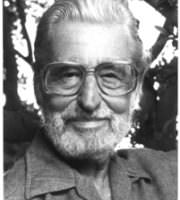
Theodor Seuss Geisel, known as Dr. Seuss, born March 2, 1904, and died September 24, 1991, was a famous American poet, children's author, cartoonist, and animator. He was best known for his children's books, which he wrote and illustrated, comprising over 60 books from his first publication “The Pocket Book of Boners”, a collection of children's sayings, which he illustrated, and was published by Viking Press in 1931, to “If You Think There's Nothing to Do” published posthumously in 2024.His work includes many of the most popular children's books of all time, with over 600 million copies sold and translations into more than 20 languages at the time of his death. Geisel adopted the name “Dr. Seuss” while he was an undergraduate at Dartmouth College (New Hampshire, USA) and continued to use it as a graduate student at Lincoln College (Oxford, England). He had also used the pen name Dr. Theophrastus Seuss, and later used Theo LeSieg and Rosetta Stone.
He left Oxford in 1927 to begin his career as an illustrator and cartoonist for Vanity Fair, Life, and other magazines. Dr. Seuss published his first children's book, “And to Think That I Saw It on Mulberry Street”, in 1937, but his first nationally published cartoon appeared in the July 16, 1927 issue of the Saturday Evening Post. This one-off sale for $25 prompted Geisel to move from Springfield to New York City.
During World War II, he briefly stepped away from children's literature to focus on political cartoons, but he returned soon after the war to writing new books penning classics such as “If I Were Running to the Circus” (1956), “The Cat in the Hat” (1957), and “How the Grinch Stole Christmas!” (1957). Many of his books were adapted into numerous media, including eleven television specials, five feature movies, a Broadway musical show, and four television series.
Geisel won the Lewis Carroll Shelf Award in 1958 for “Horton Hatches the Egg” and again in 1961 for “And to Think That I Saw It on Mulberry Street”. He also received two Academy Awards, two Emmy Awards, a Peabody Award, the Laura Ingalls Wilder Medal, and the Pulitzer Prize. Dr. Seuss has a star on the Hollywood Walk of Fame, located at 6500 Hollywood Boulevard.
Dr. Seuss wrote most of his books in anapestic tetrameter, a poetic meter employed by many poets of the English literary canon. This is often suggested as one of the reasons that Geisel's writing was so well received. Geisel also wrote verse in trochaic tetrameter, an arrangement of a strong syllable followed by a weak syllable, with four units per line (for example, the title of One Fish Two Fish Red Fish Blue Fish).
Dr. Seuss birthday, March 2, has been adopted as the annual date for National Read Across America Day, an initiative on Reading created by the National Education Association.
Browse all poems and texts published on Dr. Seuss
The more that you read, the more things you will know. The more that you learn, the more places you'll go.